
Cruising Guide · St. Vincent & the Grenadines
Sailing the Grenadines
Sixty miles of small islands and uninhabited cays, set in protected water with steady trade winds and almost no commercial traffic — the finest cruising ground in the Caribbean, and how to sail it.
Private proposals within 48 hours
From
$595from one day
Departure
Canouan · St. Vincent & the Grenadines
Aboard
Cap II · Flying Wing
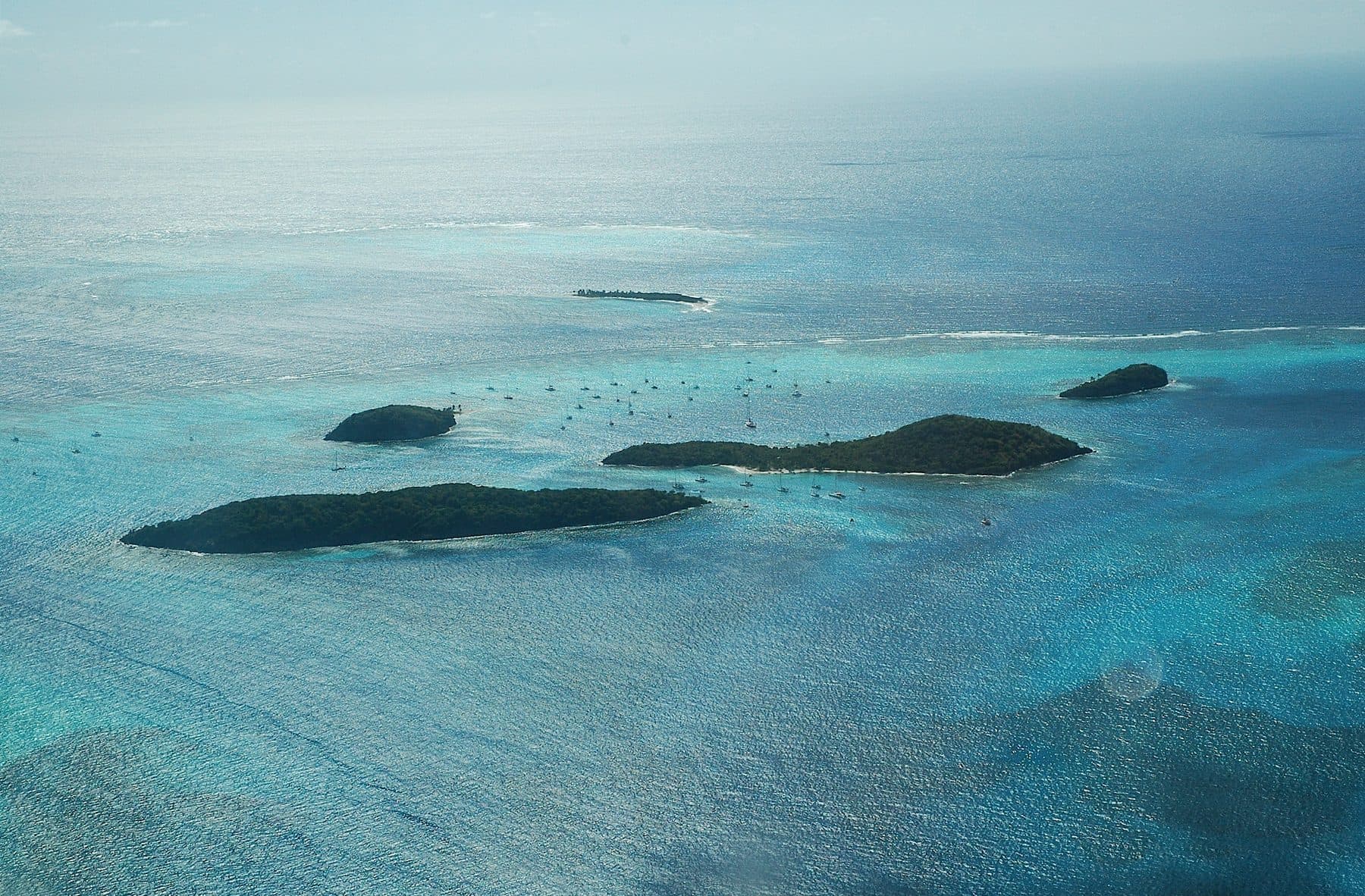
The Grenadines are a chain of roughly thirty small islands and cays running south from St. Vincent for sixty nautical miles, ending at Petit Saint Vincent on the border with Grenada. Most are uninhabited. The handful that carry villages — Bequia, Canouan, Mayreau, Union Island — are small enough to walk across in an afternoon. What sits between them is the point: shallow, protected water in every shade of blue, reefs you can swim to from the deck, and anchorages where some nights you will share the bay with two other yachts and some nights with none.
It is, by most measures, the best cruising ground in the Caribbean. The islands are close together — the longest passage on a typical week is under twenty nautical miles — so the sailing is a series of comfortable reaches rather than long deliveries. The trade winds blow steady from the east-north-east, twelve to twenty knots through the season, which means you sail every day rather than motor. There is no commercial shipping to speak of. And the Tobago Cays Marine Park — five uninhabited cays behind a horseshoe reef — is the kind of place that does not really have an equivalent anywhere else in the islands.
We base our fleet at Canouan, in the geographic centre of the chain. That matters more than it sounds. From Canouan, every island worth sailing to is within a single comfortable day: the Tobago Cays at ten nautical miles, Mustique at fifteen, Mayreau at twelve, Union Island at sixteen, Bequia at twenty. A charter from the centre of the chain spends its time at anchor and under sail, not on long passages to and from a base at one end.
This guide covers what a charter actually looks like — the season, the route, the islands one by one, and the practical questions guests ask before they book. If you already know the Grenadines and simply want to talk dates, the enquiry button works from anywhere on this page. If you are still deciding whether this is the right cruising ground for your week, read on.
A note on how charters here divide. A day charter is a single day out of Canouan — six to ten hours, a route shaped on the morning of, back to the marina by evening. It suits guests staying ashore on Canouan or Mustique who want one day on the water, and it is the least expensive way to see the chain under sail. A term charter is a week aboard — seven nights at anchor across the islands, the yacht as the accommodation. It suits guests who want the Grenadines to be the holiday rather than an excursion from it. Both run on the same fleet, with the same crew, from the same marina.
The sailing itself is forgiving. The water is protected by the reefs and the islands, so the seas inside the chain are flat to moderate even when the trades are up. Distances are short. The hazards — the reefs — are well charted and, from the deck of a crewed yacht, somebody else's job to watch. It is a cruising ground that rewards first-time charter guests and seasoned sailors equally, which is not true of everywhere in the Caribbean.
What does not change between a day and a week is the kind of yacht and the kind of day. Our fleet is classic crewed sailing yachts — Cap II, a 77 ft CNB flagship; Flying Wing, a 75 ft classic; and SISU, a 37 ft entry yacht — each chartered privately, never by the seat, never sub-chartered out of region. The day is shaped around the guests aboard: where to anchor, how long to stay, when to sail. That is the Rex Sailing difference, and it is the same whether you are aboard for eight hours or seven nights.
Highlights of this charter
Canouan — the home port
Three miles long, with the most sheltered marina in the chain at Sandy Lane. Our base. Charlestown Bay, Rameau Bay's reef, and the Pink Sand Beach on the windward coast. The geographic centre of the Grenadines — every other island within a day's reach.
The Tobago Cays Marine Park
Five uninhabited cays behind Horseshoe Reef — the single most photographed anchorage in the Caribbean. Sea turtles in the seagrass at Baradal, snorkelling straight off the mooring, a beach barbecue on Petit Bateau. Ten nautical miles from Canouan; the centrepiece of almost every charter.
Mustique
The famous private island fifteen miles north. Anchor in Britannia Bay, tender ashore to Basil's Bar, walk to Macaroni Beach. Quiet, expensive, and unmistakably itself. A long day-sail from Canouan or an easy overnight on a week charter.
Bequia
The most genuine harbour town in the chain — Admiralty Bay, the Belmont Walkway, model boat-builders, the Tuesday jump-up. Twenty nautical miles north of Canouan; the furthest regular stop, and worth the reach.
Mayreau
The smallest inhabited Grenadine. Saltwhistle Bay — a sand spit between the Caribbean and the Atlantic, two beaches back-to-back — is one of the best anchorages in the islands. Twelve nautical miles from Canouan, often paired with a Tobago Cays day.
Union Island
Clifton Harbour, the kitesurfing capital of the southern Grenadines, and Happy Island — a bar built on a conch-shell sandbar. Chatham Bay on the leeward side for a quiet contrast. Sixteen nautical miles south of Canouan.
Palm Island & Petit St. Vincent
The two southern private-island resorts, with leeward anchorages open to charter guests for lunch and a swim. The tiny Mopion sandbar — one thatched parasol, nothing else — sits on the way. The quiet southern end of the chain.
St. Vincent
The mainland — eighteen miles of volcanic coast, the least-visited stop on a charter and the one that surprises guests most. Wallilabou Bay, where Pirates of the Caribbean was filmed, and La Soufrière volcano above it. Added on longer weeks.
Sailing this route with RexSailing
When to sail
December through July. The trades are most settled and the rainfall lowest from January to April — the peak season, and the weeks that book out first. June and July are quieter and equally good sailing. We do not operate August through October — hurricane season. Book February to April weeks several months ahead.
Getting to Canouan
Canouan has its own airstrip, with regional connections from Barbados, St. Lucia, and Argyle (St. Vincent). Most guests fly directly in — a five-minute drive to Sandy Lane Marina. We coordinate the transfer once your route is set. Boarding day is unhurried: the captain's briefing happens over coffee in the cockpit.
How long you need
A single day out of Canouan shows you the sailing and one or two anchorages. Three to four nights aboard reaches the core — the Tobago Cays, Mustique, Mayreau. A full week takes in Bequia to the north and Union Island and the private islands to the south, at a pace that never feels rushed. Seven nights is the classic, and the one we would recommend.
What is included
Every charter is crewed and all-inclusive. The published rate covers the yacht, the crew, fuel, mooring and marina fees, customs clearance between islands, and full provisioning — three meals a day prepared aboard. Restaurant nights ashore are arranged on request and billed at end-of-charter cost. No surprise extras.
Pair this charter with
Day Charters
A single day out of Canouan — six to ten hours, from $595. The least expensive way to sail the chain.
Explore →
Week Charters
Seven nights aboard across the islands — the classic Grenadines charter, from $11,750 all-inclusive.
Explore →
The Fleet
Cap II, Flying Wing, and SISU — three classic crewed yachts, from $595 to $2,950 per day.
Explore →
Tobago Cays Guide
The marine park in detail — the cays, the reef, the turtles, the moorings, and how a day there unfolds.
Explore →
Mustique Guide
The private island — Britannia Bay, Basil's Bar, Macaroni Beach, and what a charter visit looks like.
Explore →
Canouan Guide
Our home port — Sandy Lane Marina, the Pink Sand Beach, and how to start a charter from the island.
Explore →
Before you enquire
What is the best time of year to sail the Grenadines?
December through July. The northeast trade winds are most settled and rainfall is lowest from January to April — this is the peak season, and the weeks that book out earliest. June and July are quieter, warmer, and equally good for sailing. We do not operate August through October, which is hurricane season in the eastern Caribbean. If you want a February-to-April week, enquire several months ahead.
How long do you need to sail the Grenadines properly?
A single day out of Canouan shows you the sailing and one or two anchorages — enough to understand the cruising ground, not enough to see it. Three to four nights aboard reaches the core: the Tobago Cays, Mustique, Mayreau's Saltwhistle Bay. A full seven nights takes in Bequia to the north and Union Island and the private islands to the south, at a pace that never feels rushed. Seven nights is the classic charter and the length we would recommend.
Is the Grenadines good for first-time charter guests?
Yes — it is one of the most forgiving cruising grounds in the Caribbean. The islands sit close together, so passages are short. The reefs and islands protect the water, so the seas inside the chain stay flat to moderate even when the trades are up. And on a crewed charter the navigation, the anchoring, and the reef-watching are the crew's job, not yours. First-time guests and experienced sailors enjoy it equally.
Should I charter bareboat or crewed in the Grenadines?
Our charters are all crewed — captain, chef, and deckhand aboard, the day shaped around the guests rather than around running the boat. A crewed charter means you arrive to a provisioned yacht, you are looked after for the duration, and the local knowledge of which anchorage to take in which wind is built in. It suits guests who want the Grenadines to be a holiday rather than a project. Bareboat is a different kind of trip and not what we offer.
How do I get to Canouan to start a charter?
Canouan has its own airstrip with regional connections from Barbados, St. Lucia, and Argyle International (St. Vincent). Most guests fly directly into Canouan — it is a five-minute drive from the airstrip to Sandy Lane Marina, where the fleet is based. We coordinate the transfer once your itinerary is confirmed. Guests can also arrive via St. Vincent by road and ferry; we will advise the best routing for your origin.
What is the sailing actually like — wind and conditions?
Steady. The northeast trade winds blow twelve to twenty knots through the season, reliably enough that you sail every day rather than motor. The water inside the chain is protected by the reefs and the islands, so the seas are flat to moderate. Passages between islands are short — the longest on a typical week is under twenty nautical miles, most are well under that. It is comfortable, consistent sailing, which is a large part of why the Grenadines have the reputation they do.
Can you charter the Grenadines with children or a family?
Yes. The short passages, the calm anchorages, and the swimming-and-snorkelling rhythm of a Grenadines charter suit families well. Our yachts carry children's life jackets and snorkelling gear sized down, and the chef accommodates younger guests' preferences. SISU, our 37 ft entry yacht, works well for a couple with one or two children; Flying Wing and Cap II carry larger family groups.
The Grenadines reward the people who take the time to sail them properly — at anchor, under sail, on the water rather than looking at it from a hotel. Tell us your dates and the length of charter you have in mind, and we will shape the rest around you.
Find the Right Yacht for Your Charter
Tell us your dates, group size, and preferred experience - we will match you with the ideal yacht.
Private proposals within 48 hours · Enquiries handled discreetly
RexSailing · Canouan · St. Vincent & the Grenadines