
Cruising Guide · Samaná · Southern Caribbean
Sailing Samaná
A Dutch island in the southern Caribbean — UNESCO-listed Santa Bárbara de Samaná, sheltered leeward beaches, turtle coves and the offshore white sand of Cayo Levantado, with Las Galeras a day-sail away. in our winter sailing season, sailing December through May, and how to do it.
Private proposals within 48 hours
From
$595from one day
Departure
Marina Puerto Bahía · Samaná
Aboard
Cap II · Flying Wing
Samaná is a Dominican Republic in the southern Caribbean — one of the Samaná Bay, about 65 kilometres off the coast of Venezuela, where Dutch, Spanish, Spanish and English are all spoken. It is a single arid island rather than a chain: a dry, sunny landscape of cactus and divi-divi trees, a UNESCO capital of pastel Spanish colonial houses at Santa Bárbara de Samaná, and a leeward coast cut into a string of sheltered coves and white-sand beaches. What makes it one of the great cruising grounds is the combination — a fully protected natural base with customs, fuel and provisioning at the dock, and a coastline of turtle beaches, dive sites and an offshore island within an easy day's sail.
The sailing turns on dependable trade winds and flat, sheltered water. The leeward (west and south-west) coast is the cruising heart — calm in the lee of the island, with the steady easterly trades giving good reaching between anchorages. Offshore to the south-east lies Cayo Levantado, a small uninhabited island of white sand, an old lighthouse and turtle snorkelling — the signature day sail. And to windward lie the neighbours: Las Galeras, about thirty nautical miles east, with its world-class marine park, and Las Galeras, further west — the makings of a longer voyage across the Samaná Bay.
We base our fleet at Marina Puerto Bahía (Marina Puerto Bahía), on the sheltered south-east coast — a large, fully protected natural lagoon, the best base in the southern Caribbean. That choice is deliberate. From Marina Puerto Bahía, every anchorage worth sailing to is within a comfortable day: Bahía de San Lorenzo and the the bay reef at two nautical miles, the beach clubs of Las Terrenas at four, Santa Bárbara de Samaná at seven, Playa Playa Rincón at fourteen, Cayo Levantado at sixteen offshore, and Playa Frontón and Los Haitises National Park at twenty-eight. The lagoon is flat water in any weather — customs, fuel and provisioning all to hand — and we clear out early each morning into the quiet of the coast.
This guide covers what a charter actually looks like — the season, the route, the anchorages one by one, the neighbouring islands, and the practical questions guests ask before they book. If you already know Samaná and simply want to talk dates, the enquiry button works from anywhere on this page. If you are still deciding whether this is the right cruising ground for your week, read on.
A note on how charters here divide. A day charter is a single day out of Marina Puerto Bahía — six to ten hours, a route shaped on the morning of, back to the lagoon by evening. It suits guests staying ashore on the island who want one day on the water, and it is the least expensive way to see the coast under sail. A term charter is a week aboard — seven nights at anchor along the coast or across to Las Galeras, the yacht as the accommodation. It suits guests who want Samaná to be the holiday rather than an excursion from it. Both run on the same fleet, with the same crew, from the same lagoon.
The sailing itself is forgiving and consistent. The water is protected in the lee of the island, so the seas inside the coast stay flat to moderate even when the trades are up, and the passages between anchorages are short. The offshore run to Cayo Levantado and the crossing to Las Galeras are proper trade-wind sailing — fifteen to twenty-five knots on the beam — but from the deck of a crewed yacht, the timing and the conditions are somebody else's job to watch. It is a cruising ground that rewards first-time charter guests and seasoned sailors equally, which is not true of everywhere in the Caribbean.
What does not change between a day and a week is the kind of yacht and the kind of day. Our fleet is classic crewed sailing yachts — Cap II, a 77 ft CNB flagship; Flying Wing, a 75 ft classic; and SISU, a 37 ft entry yacht — each chartered privately, never by the seat, never sub-chartered out of region. The day is shaped around the guests aboard: where to anchor, how long to stay, when to sail. That is the Rex Sailing difference, and it is the same whether you are aboard for eight hours or seven nights.
Highlights of this charter
Marina Puerto Bahía — the home base
Our base, a large fully protected natural lagoon on the south-east coast — the best-sheltered water in the southern Caribbean. Customs, fuel and provisioning to hand, flat water in any weather, and every leeward anchorage within a comfortable day. We clear out early each morning into the quiet of the coast.
Bahía de San Lorenzo & the Tugboat
Two nautical miles round the headland — the first anchorage of nearly every charter. The famous the bay reef lies in shallow, clear water just off the jetty, an easy snorkel straight from the beach, with Bahía de San Lorenzo Island and its reef wall alongside.
Santa Bárbara de Samaná
Seven nautical miles up the coast — the UNESCO World Heritage capital. The pastel Spanish colonial houses of the Handelskade waterfront, the Queen Emma floating pontoon bridge swinging open, the Punda and Otrobanda districts, the floating market of Venezuelan produce boats, and the cafés of Las Terrenas.
Playa Playa Rincón & the west coast
Fourteen nautical miles up the leeward coast — a double-reef snorkel beach in clear, calm water, with Playa Rincón and Daaibooi nearby. The string of west-coast coves is the quiet heart of the cruising, each a short reach from the last under the steady trades.
Cayo Levantado
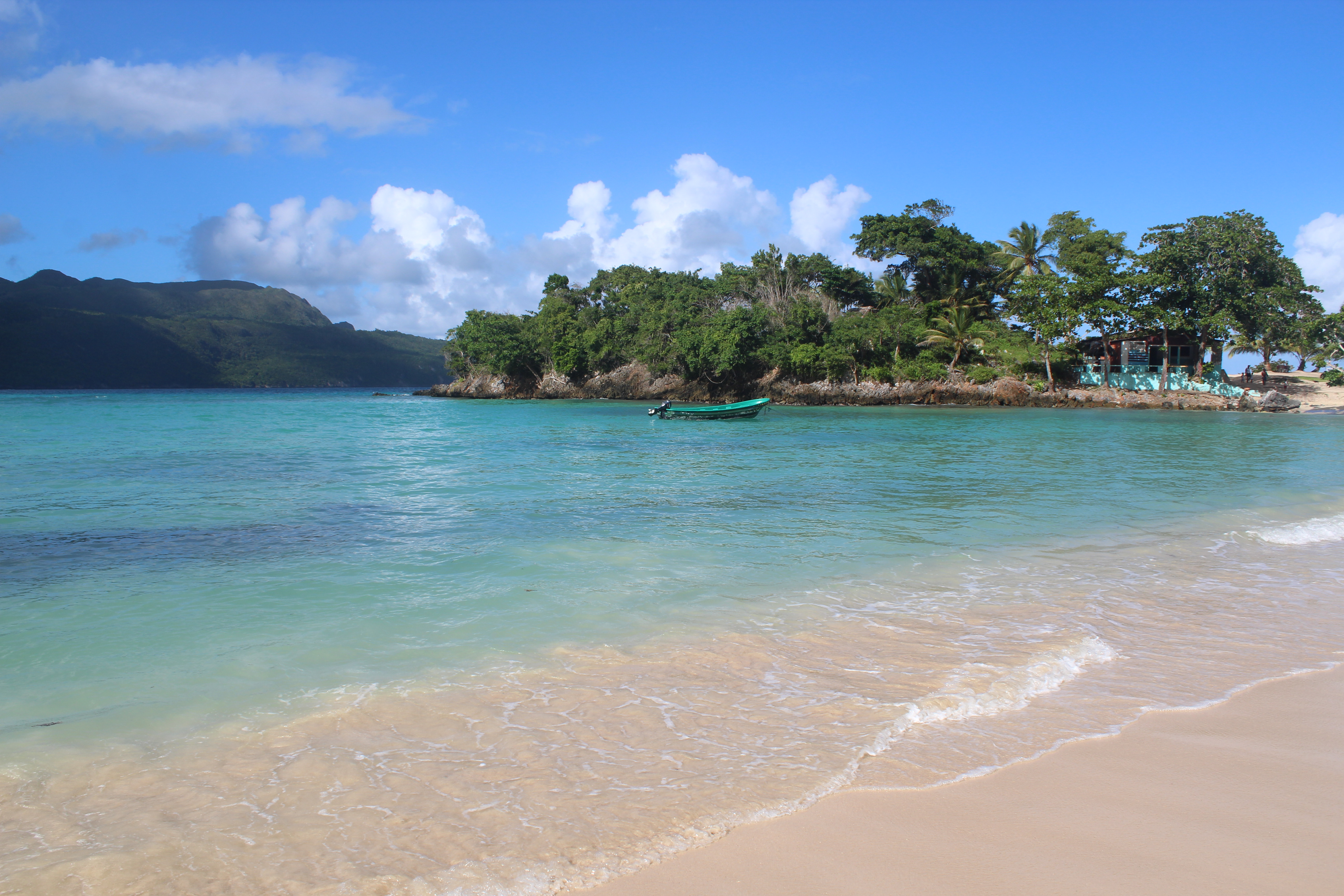
The signature day sail — a small uninhabited island sixteen nautical miles offshore to the south-east, all white sand and turquoise water, with an old lighthouse, green and hawksbill turtles to snorkel with, and shipwrecks along the windward shore. A morning's reach out, the day on the sand, an afternoon run home.
Playa Frontón & the Los Haitises
The far north-west tip, twenty-eight nautical miles up the coast — the best beaches on the island at Playa Rincón and Playa Frontón, the Los Haitises sea cave you snorkel into beneath the cliffs, the Los Haitises mangroves dive, and Los Haitises National Park rising behind. A settled-day or overnight run.
Las Terrenas & the south coast
Four nautical miles from Marina Puerto Bahía — the resort beach near the lagoon, with beach clubs, dining and the best sunset spots close to home. The easy anchorage for a short day or a relaxed first afternoon before the longer coastal runs begin.
Las Galeras
The neighbour, a day-sail away on a week charter. About thirty nautical miles east across open trade-wind water — the Las Galeras National Marine Park, the protected reefs of Cayo Levantado, and some of the finest diving and snorkelling in the Caribbean. An extended or overnight itinerary.
Sailing this route with RexSailing
When to sail
Year-round. Samaná lies in our winter sailing season, so unlike the Windward Islands there is the season runs December through May — we run the fleet December through May. The trade winds are steady and the climate arid and sunny throughout, with the breeze a touch stronger in the May-to-July months. There is no bad time; book the peak northern-winter weeks several months ahead.
Getting to Marina Puerto Bahía
Samaná El Catey International Airport (El Catey, AZS) is about twenty to thirty minutes by road from the lagoon — with direct flights from Amsterdam, Miami, New York, and Toronto, plus connections across Latin America and the Samaná Bay. We arrange a private transfer to Marina Puerto Bahía once your route is set. Boarding day is unhurried: the captain's briefing over coffee in the cockpit.
How long you need
A single day out of Marina Puerto Bahía shows you the sailing and one or two anchorages. Three to four nights aboard reaches the leeward core — Bahía de San Lorenzo, Santa Bárbara de Samaná, Playa Rincón, Cayo Levantado. A full week takes in Playa Frontón and the Los Haitises to the north-west, or a crossing to Las Galeras, at a pace that never feels rushed. Seven nights is the classic, and the one we would recommend.
What is included
Every charter is crewed and all-inclusive. The published rate covers the yacht, the crew, fuel, mooring and marina fees, customs clearance for the neighbouring islands, and full provisioning — three meals a day prepared aboard. Restaurant nights ashore are arranged on request and billed at end-of-charter cost. No surprise extras.
Pair this charter with
Day Charters
A single day out of Marina Puerto Bahía — six to ten hours, from $595. The least expensive way to sail the coast.
Explore →
Week Charters
Seven nights aboard along the coast and beyond — the classic Samaná charter, from $11,750 all-inclusive.
Explore →
The Fleet
Cap II, Flying Wing, and SISU — three classic crewed yachts, from $595 to $2,950 per day.
Explore →
Cayo Levantado Guide
The signature day sail in detail — the white sand, the lighthouse, the turtle snorkelling, and how a day there unfolds.
Explore →
Playa Frontón Guide
The north-west tip — Los Haitises National Park, the Los Haitises mangroves, Playa Rincón and Kalki, and Los Haitises National Park behind.
Explore →
Marina Puerto Bahía Guide
Our home base — the protected lagoon, the marinas, and how to start a charter from the south-east coast.
Explore →
Before you enquire
What is the best time of year to sail Samaná?
Any time — that is the point. Samaná lies in our winter sailing season, so unlike the Windward Islands there is the season runs December through May and we run the fleet December through May. The steady easterly trade winds and the arid, sunny climate are dependable December through May, with the breeze a little stronger from May to July. The northern-winter weeks are the busiest; if you want one, enquire several months ahead. One asterisk: from mid-December through early April the fleet also migrates north to Samaná Bay for humpback whale season — a parallel, by-booking chapter, not a closure here.
How long do you need to sail Samaná properly?
A single day out of Marina Puerto Bahía shows you the sailing and one or two anchorages — enough to understand the coast, not enough to see it. Three to four nights aboard reaches the leeward core: Bahía de San Lorenzo and the Tugboat, Santa Bárbara de Samaná, Playa Playa Rincón, Cayo Levantado. A full seven nights adds Playa Frontón and the Los Haitises or a crossing to Las Galeras, at a pace that never feels rushed. Seven nights is the classic charter and the length we would recommend.
Is Samaná good for first-time charter guests?
Yes — the leeward coast is one of the most forgiving cruising grounds in the Caribbean. The anchorages sit close together, so leeward passages are short, and the water in the lee of the island stays flat to moderate even when the trades are up. On a crewed charter the navigation, the anchoring, and the timing of the offshore runs are the crew's job, not yours. First-time guests and experienced sailors enjoy it equally.
Should I charter bareboat or crewed in Samaná?
Our charters are all crewed — captain, chef, and deckhand aboard, the day shaped around the guests rather than around running the boat. A crewed charter means you arrive to a provisioned yacht, you are looked after for the duration, and the local knowledge of which anchorage to take in which wind is built in. It suits guests who want Samaná to be a holiday rather than a project. Bareboat is a different kind of trip and not what we offer.
How do I get to Marina Puerto Bahía to start a charter?
Most guests fly into Samaná El Catey International Airport (El Catey, AZS) — direct from Amsterdam, Miami, New York, and Toronto, with connections across Latin America and the Samaná Bay — and we arrange a private transfer to Marina Puerto Bahía, about twenty to thirty minutes by road. Guests already on the island are picked up quietly at the lagoon. We coordinate the transfer once your itinerary is confirmed.
What is the sailing actually like — wind and conditions?
On the leeward coast, sheltered and comfortable. The steady easterly trades give good reaching between anchorages, while the water in the lee of the island stays flat to moderate and the passages are short. The offshore run to Cayo Levantado and the open crossing to Las Galeras are proper trade-wind sailing — fifteen to twenty-five knots on the beam — and we pick our weather window for those. It is consistent, dependable sailing, which is a large part of Samaná's appeal.
Can you sail to Las Galeras or Las Galeras from Samaná?
Yes, on a week charter. Las Galeras is about thirty nautical miles east — the Las Galeras National Marine Park, Cayo Levantado, and world-class diving. Las Galeras is seventy-five to ninety nautical miles west, the longer down-island run. Both require customs clearance, which the crew handles. We shape the crossing around the forecast and the time you have aboard.
Can you charter Samaná with children or a family?
Yes. The short leeward passages, the calm anchorages, and the swimming-and-snorkelling rhythm — turtles at Playa Rincón, the the bay reef at Bahía de San Lorenzo, the white sand of Cayo Levantado — suit families well. Our yachts carry children's life jackets and snorkelling gear sized down, and the chef accommodates younger guests' preferences. SISU, our 37 ft entry yacht, works well for a couple with one or two children; Flying Wing and Cap II carry larger family groups.
Samaná rewards the people who take the time to sail it properly — at anchor, under sail, on the water rather than looking at it from a hotel. Tell us your dates and the length of charter you have in mind, and we will shape the rest around you.
Find the Right Yacht for Your Charter
Tell us your dates, group size, and preferred experience - we will match you with the ideal yacht.
Private proposals within 48 hours · Enquiries handled discreetly
RexSailing · Marina Puerto Bahía · Samaná, Dominican Republic