How to get here
and what you need.
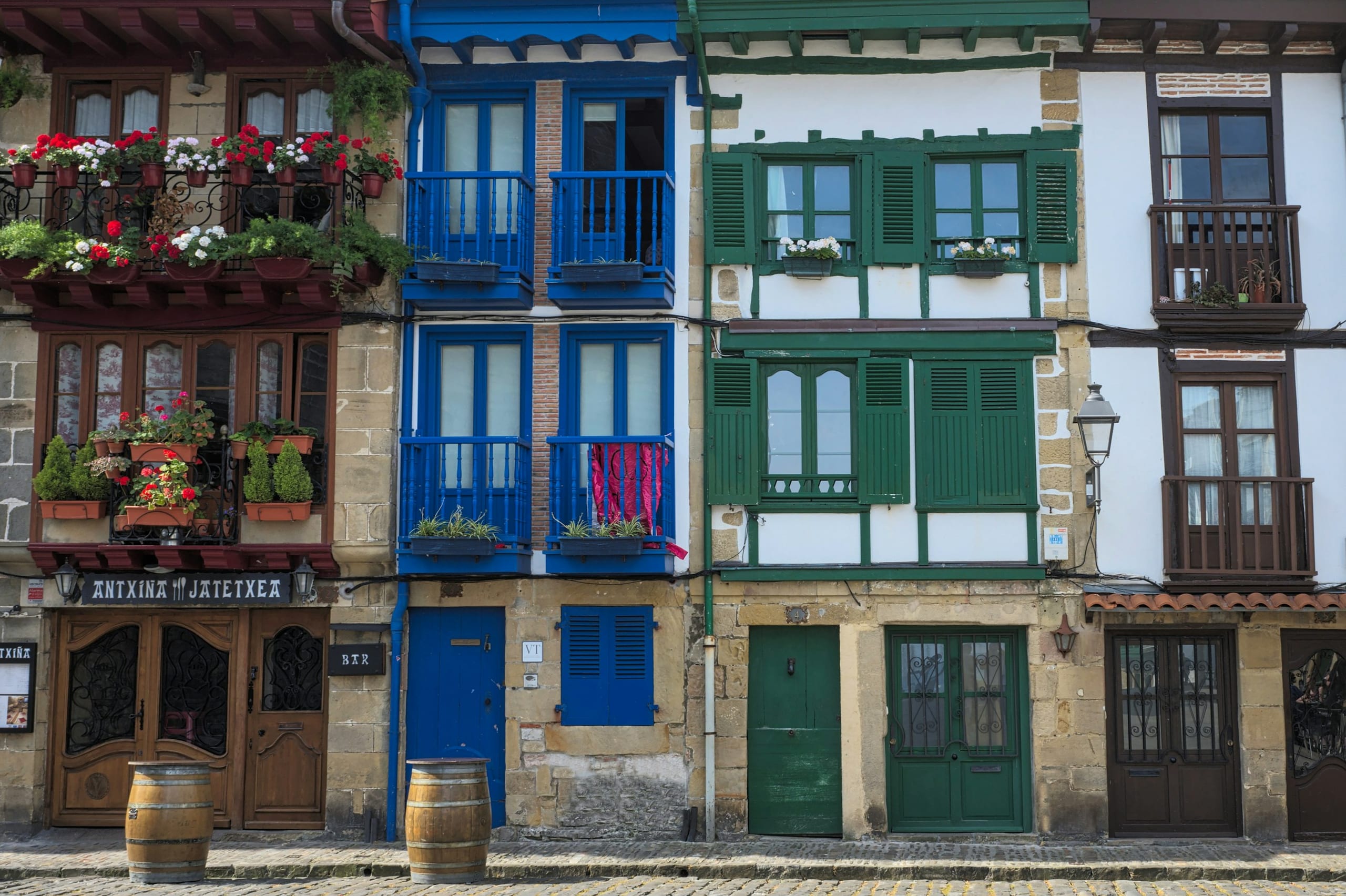
We sail from Hondarribia, on the border between Spain and France. If you are coming from the United States, Mexico, Colombia or Argentina, this is what to sort out before you book a flight.
Three airports, one of them in the town.
Hondarribia is better connected than the map suggests. San Sebastián airport is literally here, five minutes from the pontoon.
San Sebastián Airport
- ·
- In Hondarribia
- ·
- 5 min to the marina
It is in the town itself. Domestic flights, mostly from Madrid and Barcelona.
Biarritz (France)
- ·
- ~35 km
- ·
- 35 min by car
Plenty of low-cost European connections. You cross the border on the A-63.
Bilbao
- ·
- ~110 km
- ·
- 1 h 15 by car
The largest airport in northern Spain and the one with most international flights. Direct coach to San Sebastián.
By rail
Irún sits next to Hondarribia and is the border rail hub: it connects to Hendaye on the French side and from there to the TGV for Bordeaux and Paris. Coming from elsewhere in Europe, it often beats flying.
What happens at passport control.
If you hold a Spanish or EU passport, none of this applies. If you are arriving from outside the Schengen area — the US, Mexico, Colombia, Argentina, Chile, Peru — here is where things stand right now.
90 days, no visa
Passports from these countries enter the Schengen area without a visa for tourist stays of up to 90 days in any 180-day period. A sailing course fits comfortably inside that.
EES — already running
The Entry/Exit System has been operational since 10 April 2026. On your first entry your fingerprints and photograph are taken at the border. It is quick, but allow a little extra queueing the first time.
ETIAS — not yet
The ETIAS authorisation is NOT yet in force and its launch date is unscheduled; 2027 is the realistic expectation. You do not need it to come now.
Passport validity
It must be valid for at least three months beyond the date you leave the Schengen area, and have been issued within the last ten years.
Beware ETIAS websites
Because ETIAS does not exist yet, any site charging you for one today is a fraud. When it does launch the official fee is €20 and it is applied for only through the official EU portal. Do not pay an intermediary.
The Bay of Biscay is not the Mediterranean.
This is the most common mistake among people arriving from the Caribbean or the Med: the water here is cold year-round and the weather turns quickly. The sailing is the same — you just need to arrive dressed for it.
Layers, not a big coat
A base layer, a fleece and a waterproof shell. Three thin layers beat one thick one.
Waterproof jacket and trousers
Even when it isn't raining, spray gets you wet. If you don't own any, tell us beforehand and we'll sort it.
Non-marking soles
Deck shoes or trainers with light soles. No black soles on deck.
Sunglasses on a lanyard
Glare off the water is strong even under cloud, and without a lanyard they end up on the seabed.
High-factor sun cream
You burn faster at sea than on a beach, cloud or no cloud.
A soft bag, not a hard case
There is nowhere aboard for a wheeled suitcase. Duffel or rucksack.
The Biscay window.
May to October gives the best days: a thermal north-westerly filling in through the afternoon, manageable sea, and light until late. June and September usually strike the best balance of weather and quiet. We sail out of season too — Biscay in winter is serious water, and for anyone chasing real miles it is when the most is learned.
Just ask.
You'll get a person.
No chatbots, no agents: you write and the crew answers, in Spanish or English. If you're unsure about flights, dates or your level, asking is faster than guessing.
Entry rules verified August 2026. EES has been operational since 10 April 2026; ETIAS is not in force and its date is unconfirmed. Border rules change: always confirm with official EU sources and your local Spanish consulate before buying tickets.