Spanish licences,
explained straight.
The Spanish recreational licence ladder without the fog: what each title lets you skipper, how many practical hours it demands, and where you sit the exam. Then the part nobody tells you — the certificate is the beginning, not the end.
Five titles, five horizons.
Every Spanish recreational title is governed by Royal Decree 875/2014. The theory exam is set by your autonomous community, and the mandatory practical hours only count when logged by a school approved by the Dirección General de la Marina Mercante.
| Title | Max length | Miles offshore | Age | Required practice |
|---|---|---|---|---|
| LNLicencia de Navegación | 6 m | 2 | 16 | Course only, no exam |
| PNBPatrón para Navegación Básica | 8 m | 5 | 16 | 8 h + 4 h radio |
| PERPatrón de Embarcaciones de Recreo | 15 m | 12 | 18 | 16 h |
| PYPatrón de Yate | 24 m | 150 | 18 | 48 h |
| CYCapitán de Yate | 24 m | Unlimited | 18 | Navigation practice |
The PER does not cover sail.
This is what people discover too late: the PER, PNB, Patrón de Yate and Capitán de Yate are all earned on motor practice. To skipper under sail you need the separate sail endorsement — 16 further hours afloat.
The good news is you do it once. Those 16 hours endorse the title you hold and every title you earn afterwards, with no repeat.
The other side: it is 16 hours. Nobody learns to sail in 16 hours, just as nobody learns to drive during the test. It endorses. It does not teach.
What we do and what we don't.
We do not issue the PER or any official Spanish title, and we cannot log approved practical hours. Only a school accredited by the Marina Mercante can sign those off, and we are not one. If anyone offers you a fast-track PER without your community's official exam, walk away.
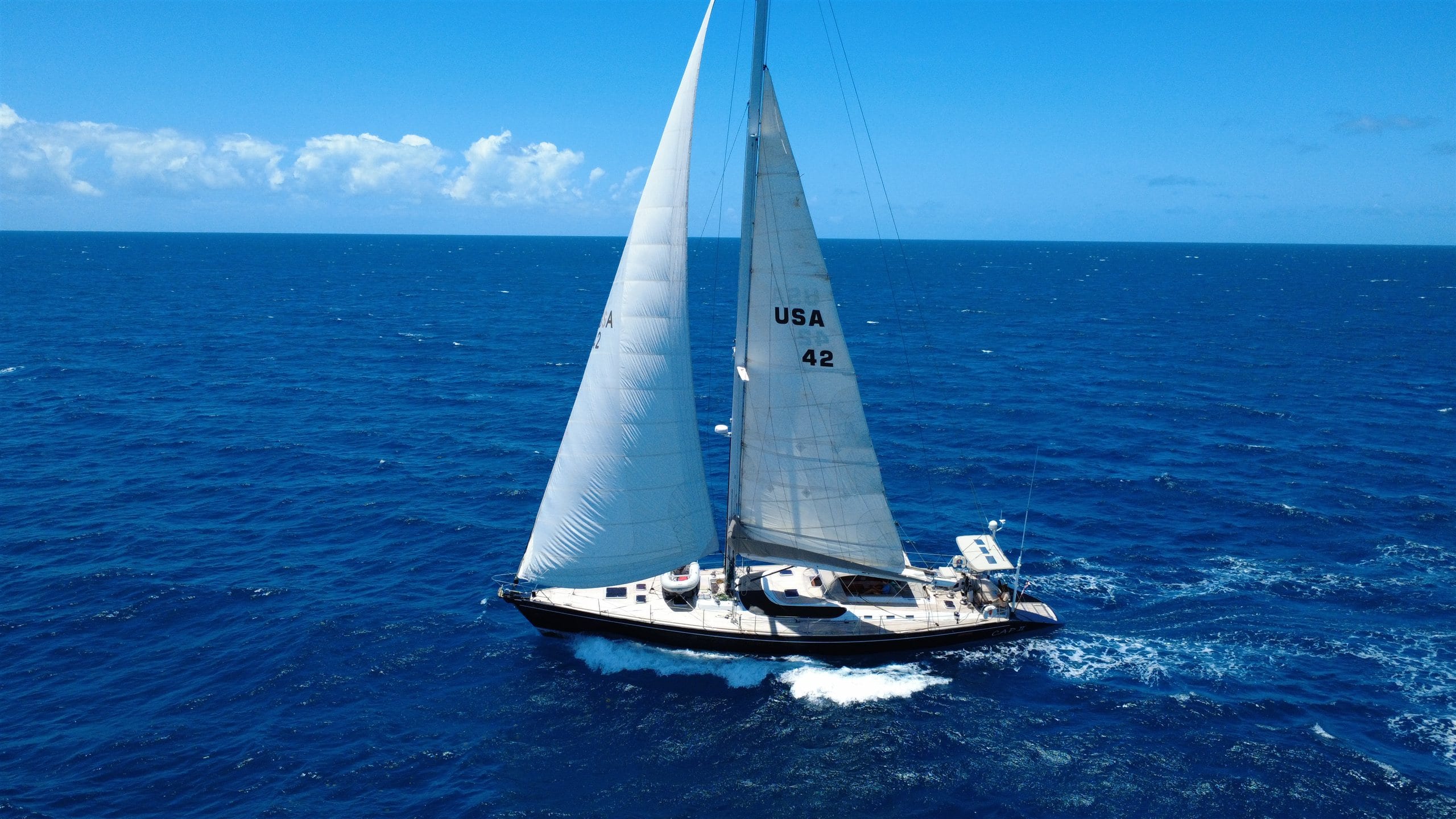
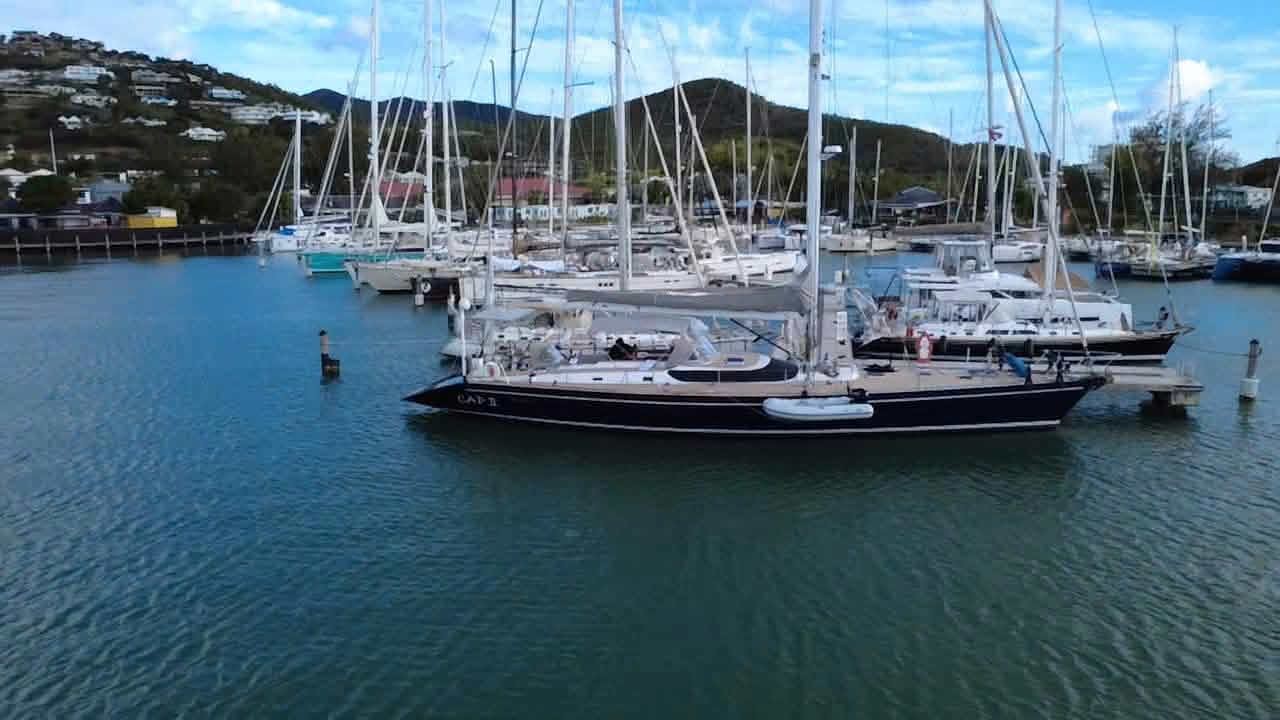
Real practical training and international ISSA qualifications out of Hondarribia, in Spanish and English. Genuine offshore miles on the Bay of Biscay and the North Atlantic aboard 14 and 23 metre boats, with watches, night passages and heavy weather when it comes.
Paper doesn't log miles.
With a PER in hand you can charter a 15 metre boat 12 miles offshore. What the PER cannot give you is the experience of having been out there. Three things separate holding the ticket from knowing how to sail:
Logged miles
International schools, insurers and any serious charter operator count miles, not certificates. Our Biscay passages and the run north are logged in your book and signed by the skipper.
Night sailing
The first night watch changes everyone. Navigation lights, commercial traffic, fatigue, and a coast you can no longer see. No classroom simulates it.
Heavy weather with a margin
The Bay of Biscay is a hard, honest school. Learning to reef before you need to, with a professional skipper beside you, is the difference between a story and a rescue.
ISSA: the ticket that crosses borders.
The International Sailing Schools Association issues internationally recognised qualifications built on demonstrated competence and logged miles rather than a regional theory paper. For anyone sailing outside Spain — or coming from Mexico, Colombia or Argentina and wanting to train in Spanish — it is usually the more direct route.
- Recognised internationally, not tied to one autonomous community
- Progression by competence and miles, not a single written exam
- Taught entirely in Spanish or English, your choice
- Sits alongside a Spanish title rather than competing with it
What people ask us.
Can I get my PER with you?
No. The PER is an official Spanish title: the theory exam is set by your autonomous community and the mandatory practical hours can only be logged by a school accredited by the Marina Mercante. We are not one, and we are not going to pretend otherwise. What we can give you is real practical training and ISSA qualifications.
I live in Mexico / Colombia / Argentina. Is the PER useful to me?
The PER is a Spanish qualification. Outside Spain its recognition depends on the country and on the individual charter company. If your goal is to sail internationally, an ISSA qualification and a logbook of miles tend to open more doors — and we teach in Spanish, which is precisely why this school exists.
How many miles do I actually need?
It depends where you want to get to. To skipper a charter boat in sheltered water, a few coastal passages will do. For offshore, international schools typically look for 200 to 1,000 logged miles depending on the level, with nights at sea. Our Biscay legs and the run to the Arctic are built to bank them quickly.
Do I need a qualification to sail with you as crew?
No. On charters and passage legs you sail as crew under a professional skipper. No certificate and no experience required — just a willingness to stand a watch.
What about the sail endorsement?
It is 16 hours of sailing added to your motor title, and it lasts for life — including the higher titles you earn later. Like the mandatory hours, it has to be logged by an accredited school.
Get the certificate where you should.
Learn to sail here.
If you want the PER, go to an accredited school in your region — that is the right answer and we will tell you so even though it sends you elsewhere. Once you have it, or if you prefer the international route, the boat, the coast and the crew are here.
Attributions and minimum ages: Royal Decree 875/2014 of 10 October (BOE-A-2014-10344) and the Ministerio de Transportes y Movilidad Sostenible. Practical hours per current regulations. Always confirm requirements with your autonomous community before enrolling — sittings and fees change.